Thursday, August 10, 2006

Benatky the Fair


They say that Venice to the north is fair,
fairer than the golden strands of steaming hair
that encircles Apollo's crown.


The streets were vacant when I came;
deserted when I left.
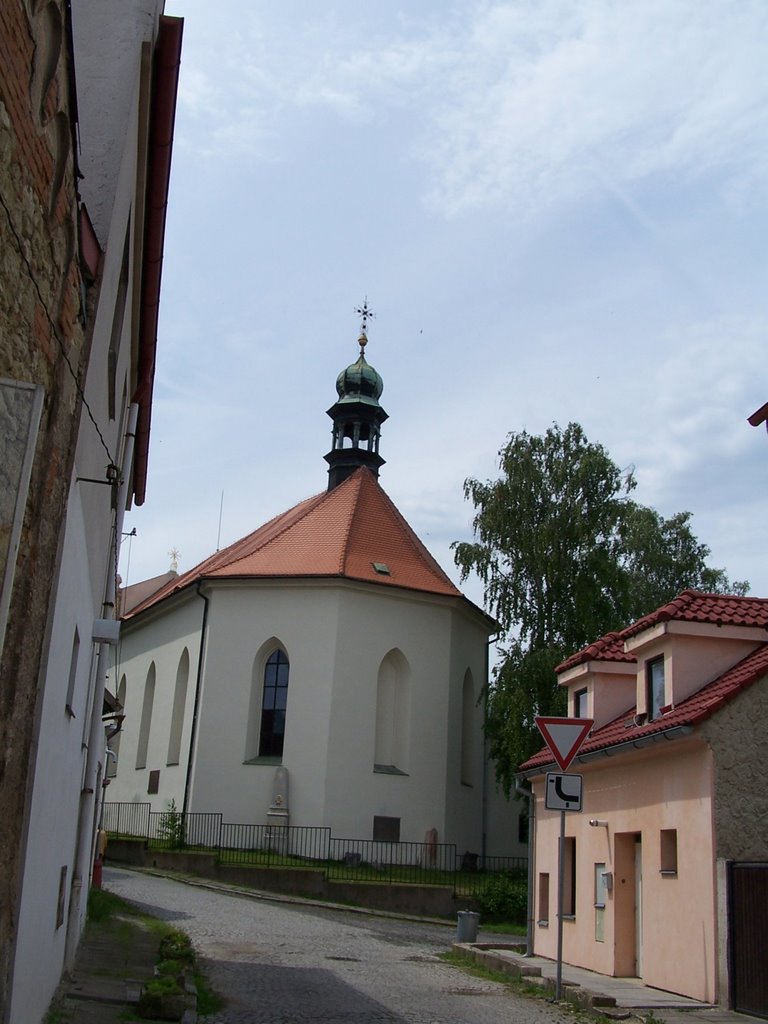
Through the cool shadows of the morning, I walked
to the rising warmth of dusk.


I wandered through
the town's deserted streets
from castle ridge
to local vitner and back,
around the empty lanes
where Jan of Drazic once rode
and John Augusta raised his voice
to protest Catholic avarice and vice.


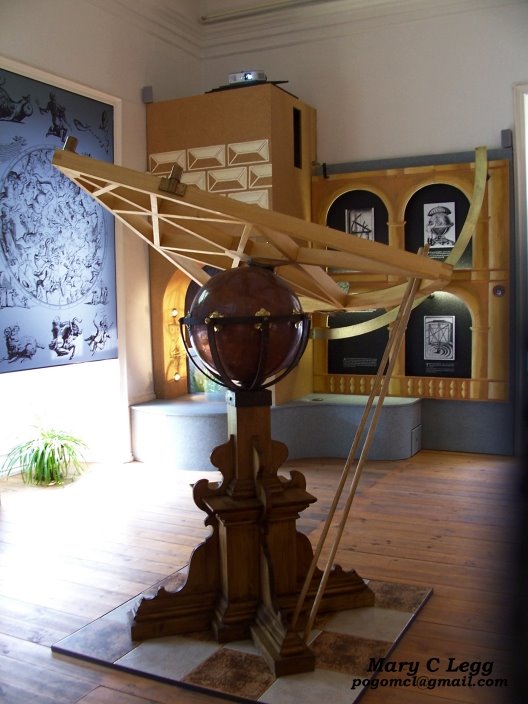
I stood before the windows where Tycho Brahe gazed
and spanned the universe with measurements,
between the earth and backward roaming Mars
that conjoins with Saturn every twenty years
to create chaos on the earth.


Where Tycho left a record of a solar eclipse
so many centuries ago on June sixth.


I left the vineyards sleeping by the castle
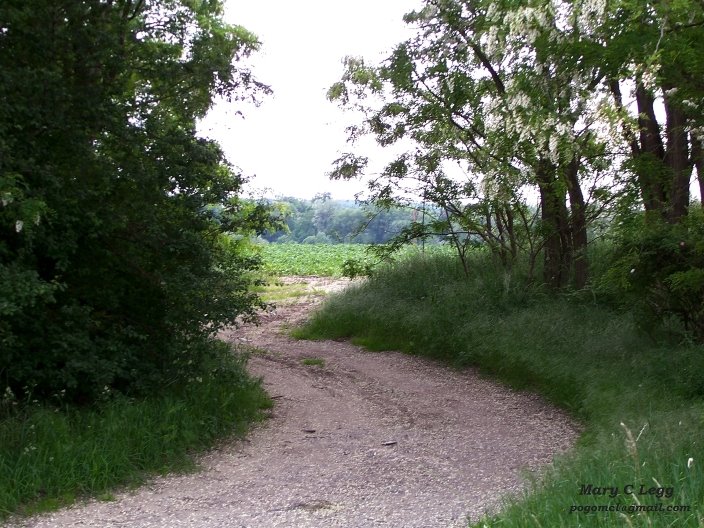
to follow the wayward road
that led beyond a lazy wooded hill
into an tangled path.


It led me down through
meadow lands,
across a narrow rumbling bridge,
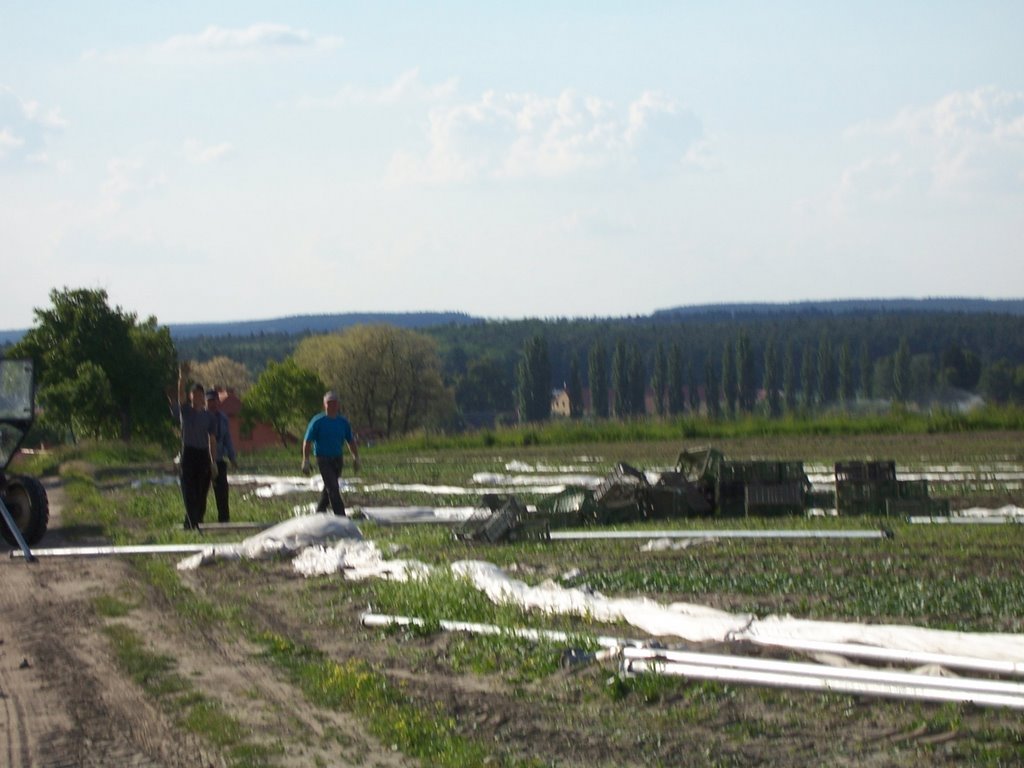
and through waves of newly scalloped fields
where workers fought with enormous snakes of irrigation pipes.


Dust clouds rose from the padded
footprints in the sand;
time stretched its legs behind me.
Each step was yet another,
kilometer and kilometer together,

there'd be no turning back.


I saw the noble falcons circling
in the sky,

awaiting a rabbit to go bounding by.


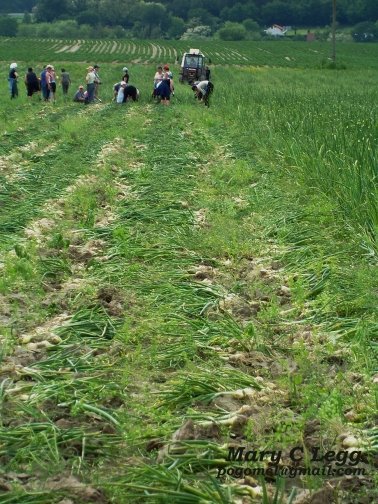
The onion-pickers bent double by their toil,
did not unbend or wave at me
as I passed them by.


And still the way lay long before me
as day stretched loong behind me,
I passed, a shadow, through villages alone.


The road wound round deserted churches
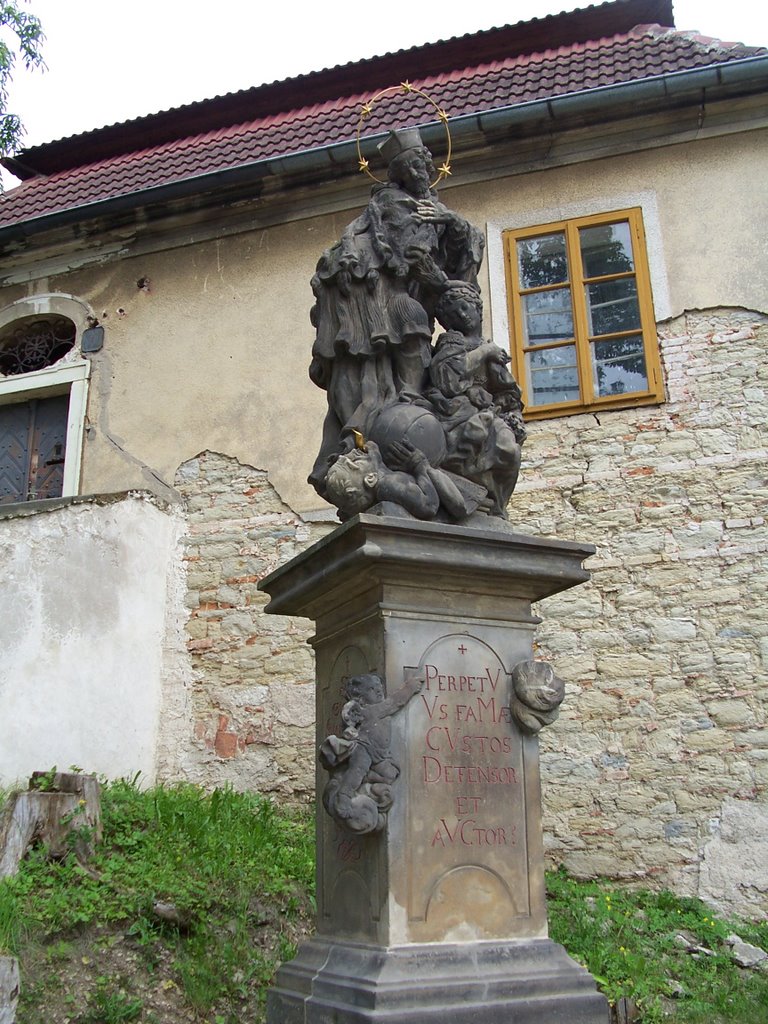
and forgotten baroque saints,
created for the counter-reformation
and persecution of Bohemian Brethern
that inhabited this land.


Though Thirty Years of war were fought
and even more endured,
the land lies peaceful in this evening
that echoes with the shot
of a solitary huntsman shooting wily pheasants.


From meridian to eve I kept
my pace,
and feared I might miss the train
and sore pressed, I never once looked back
to where I once had stood
before your house.


There was no other way
when I had stepped upon the path,
for way leads onto way


and path breaks into path
as I made the lengthy trek
from Benatky to Lysa on the Labe.


Unless I put your home behind me,
there is no way to Prague.


They say that Venice to the north is fair,
but fairer is Benatky

that hides the secrets of your eyes
and the shadows of your smile.


And there, the birds all practice lively trills
to contest your fingers' lively arpeggios
and even lowly chickens got Gershwinn's rhythm
in cackling enthusiastic syncopation.


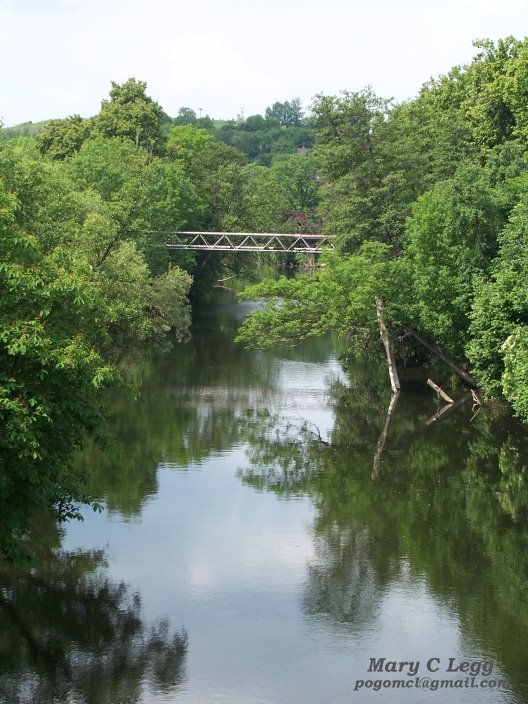
The sunlight flirts with shadows on the Jezera
with kisses rippled by the wind
that reminds me of your gentle laughter
mixed with the charm of Mozart arias
inside the Lichtenstein Palais.


Somewhere in evening's shade,
a listener hears a snatch of Brahms Ballade,
the rippling charm of Chopin's nocturnes
and Debussy's moonlight's enchantment
spun with the spinner's gossamer thread
that snares the gleaming raindrop
to glisten in the morning sun.


They say that Venice to the north is fair,
but fairer are your hands
that draws the winsome music from the keys
and weaves its net around me.


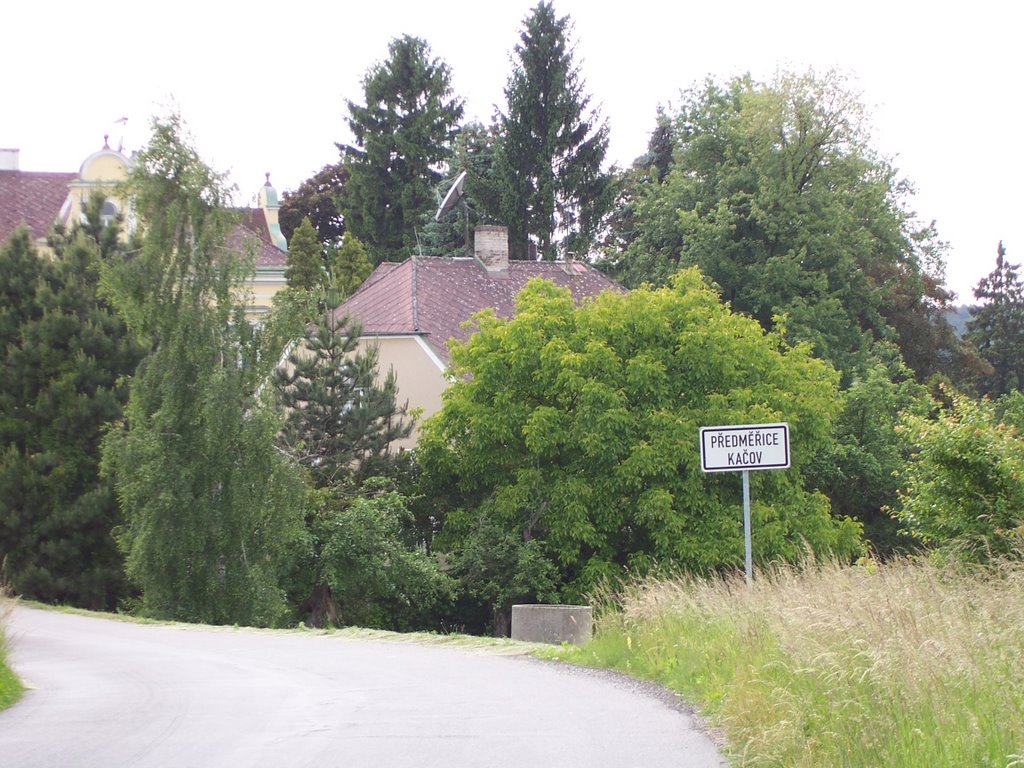
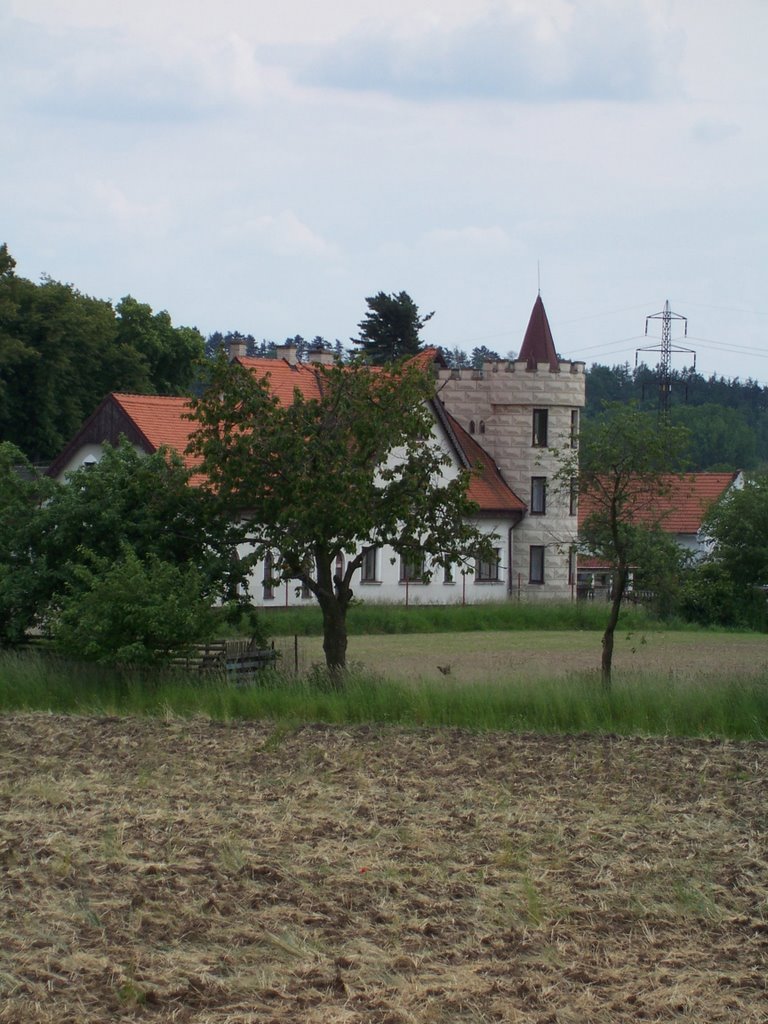
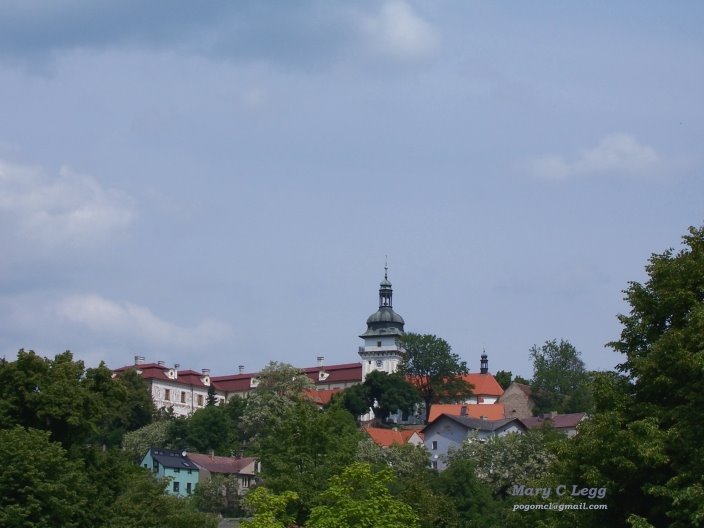
Benatky nad Jizerou
Aug 11, 2006 - 32 Photos
Benatky: Tycho and Kepler


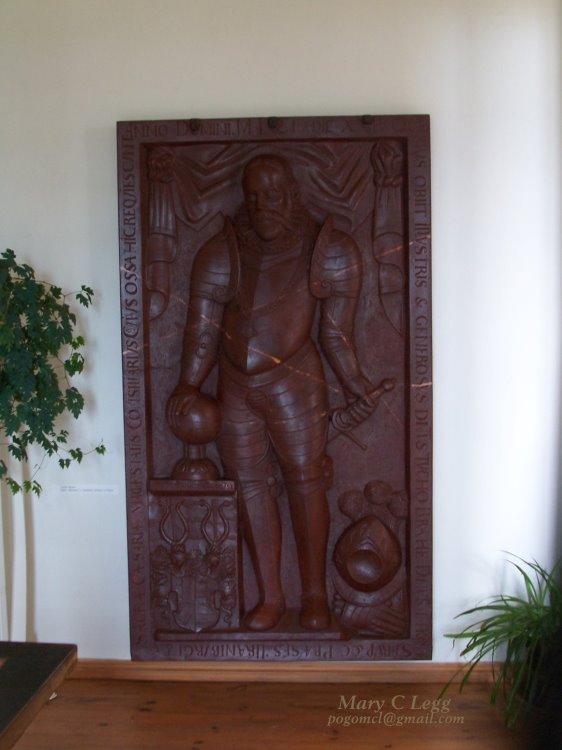
In 1599, the Benatky Palace was bought by Rudolf II who although being Catholic, had great interest in things arcane and boasted a court of artisans, alchemists and astronomers, some with overlapping abilities. Tycho Brahe had just become persona non grata in Denmark for horrendously abusing his rights as a noble. Christian IV apparently had enough complaints of his tyrannical abuse while watching a tenth of all Danish income support his lavish life on Hven. Given warning to reform and desist from abusive behavior of his citizens, Christian was not doubt justified in expelling the Tycho. Tycho had more than 11 villages and their income accumulating in his pockets which he had gained through royal charter of Frederich II. As a Royal Astronomer he received the island, Hven where he built Uraniborg and created his many astronomical instruments that were a wonder to the awakening world. Dispossessed, Tycho first went to Germany, but found no patronage. To curry favor, he wrote letters and sought patronage through the promise of publishing new discoveries and scientific expertise. Rudolf II offered him the palace at Benatky which he could modify to satisfy his needs. Tycho arrived with his family and part of his instruments. He had to leave the large ones behind him in Hven.


Kepler had been expelled from his job in Graz. Not that he was a brilliant mathematician, but because he would not submit to the new order of Catholicism there. Moreover, he was in rebellion with the Lutherans and Protestants because he ascribed to Copernician theory that the earth orbited the sun. However, it took him most of his life to debunk the myth of a universe constructed on perfect solids and epicycles with perfect orbs in circles to recognizing elliptical orbits. He had no money and had no ablity for complex calculations for which Tycho was notorious. He perceived Tycho to be the perfect solution for his professional problems and apparently Tycho understood the dire straits of Kepler to exploit them to suit his own interests. He gave the invitation and Kepler arrived in Prague to join Tycho in Benatky. Astronomically, they were both fiery temperaments about to collide. Tycho rcognizing the weaknesses of Kepler, gave him the impossible task of analyzing the orbit of Mars. Kepler admitted he had no knowledge of complex mathematics and became dependent on Tycho's superior analytical abilities and largesse.


Almost a year afterwards in 1601, Tycho died suddenly, apparently of heavy metal poisoning. Kepler free of his tyrant, became the Royal Astronomer until the demise of Rudolf II which left him without much political protection, despite patronage of the Jesuits in Prague who were in need of astronomical research for their far flung world missions. At the time, Jesuits were actively teaching heliocentric theory in China. Kepler stole Tycho's calculations which were finally published in 1627 in the Rudophine Tables to become the foundation of astronomical calculations for the next three centuries, including the 777 accurately catalogued stars of Tycho Brahe. The problem was elliptical, not circular thinking. This caused Galileo's error with the Inquisition. He refused to admit the previous work of Tycho and Kepler, insisting on perfect circular orbits without any scientific proof and then further antagonizing his interrogators by insulting them as stupid and unlearned whereas his chief interrogator was a prominently acknowledged astronomer.


Obviously in the unruly times before the outbreak of Thirty Years War and the Batttle of White Mountain, Prague was no longer safe for the outspoken Kepler. He left.


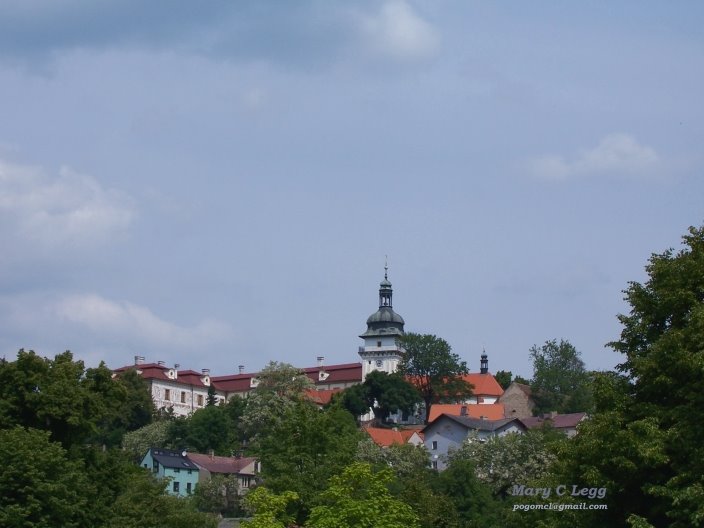
Benatky, which like all other Protestant havens became rigorously Catholicized after the Battle of White Mountain in 1620. The palace was given as bounty to the general Jan van Weerth who added the north wing to the castle. The palace was completed in 1702. Later it became the domain of the Catholic Hapsburg, ThunHohenstein—not to be confused with a famous general Thun who led the Estates allied with Sablat of the Protestant Union against Vienna in 1619. During the years of 1844-1847, young Bedrich Smetana instructed the children of ThunHohenstein the art of pianoforte. The piano still stands on the second floor of the palace which is today a museum of local history.


For a town of about 6000 inhabitants, it has more history than can be easily contained on a page and made incredibly complex by religious wars and astronomical debates which reach into the heavens.

To get to Benatky
Bus from Florenc, Stand 12 7am, 7:55am, 9:20 am, 12:15pm
pay on bus, approx 45 kc one-way

Return
catch bus at Ceska Sporitelna in Benatky 18:05, 20:40, 21:40
or walk to Lysa to catch the train. 18km train ticket: 66kc


Museum entrance: 20kc
Offering of postcards and mementos. Small medals range in price from 80kc for the small basilisks and 300kc for a Tycho medallion.

Open Tuesday –Sunday
9:00 – 12:00 a 13:00 – 17:00
Zámek 49, 294 71 Benátky nad Jizerou
Telefon - 326 316 682


Benatky p1
http://www.gather.com/viewArticle.jsp?articleId=281474976759740

Wikipedia: Tyco Brahe
http://en.wikipedia.org/wiki/Tycho_brahe

Wikipedia: Kepler
http://en.wikipedia.org/wiki/Johannes_Kepler


Benatky: Tycho and Kepler
http://pogomcl.googlepages.com/benatky%3Atychoandkepler


Benatky nad Jizerou
Aug 11, 2006 - 32 Photos
The Grapes of Drazic and Basilisk of Vrazda

Benatky nad Jizera lies approximately 30km northeast of Prague on important trade routes crossing east and west in an area that was settled by Celts in pre-Christian times. The first mention of it appears around 1052 as the town, Obodr. In 1356, Jan of Drazice applied to build a town with a monastery at the crest of the hill. The church of the Assumption of the Virgin Mary was built in 1349 adjacent to the new found monastery. The village of Drazice is within walking distance from Benatky where ruins from the ancient castle can be found.


The Benatky arms include two shields bearing three golden grapeleaves on a blue background, representing the Drazic heraldry. The Drazic nobility provided at least three Bishops of Prague and the first Archbishop of Prague.


Jan 1 Bishop of Prague 1134-1139
Jan II of Drazice 1227-1236 bishophry
Jan III of Drazice 1258-1278 bishophry
Jan IV of Drazice 1301-1345 bishophry

The Drazic arms can be seen on the Bishop's House in Prague, located on Drazicke Square on the left side of Charles Bridge in Malostrana. The Bishop's House was established as the original bishop's palace in Prague. Later Charles IV established the Archbishophry at St Vitus at the castle.


Other associations to the Drazic family include the development Cesky Brod. Under Jan I, Bishop of Prague, a marketplace was established by the church of St Gothard and a town called Biskupsky Brod, established under Jan III in 1268. The name was altered to Cesky Brod in 1315 during the occupation of the Romovs.


Jan IV of Drazic knew Pope Boniface VIII, the last pope before the Avignon Papacy. Where his loyalties lay in the struggle between church and state is not clear since he was also a friend to John of Luxemburg. John I was a strong ally of Philip the Fair who rebelled against the avaricious taxation of the Church in Rome. Philip the Fair made the succeeding pope, Clement V, his vassal and refused to concede to the superiority of the Pope over King. Charles I also maintained his independence from the papal supremacy and appointed the first Archbishop of Prague,who was also a descendent from this family.


After 1385, the Drazic lineage vanished and little can be discovered. During the Hussite Wars, the monastery was destroyed. The area became Hussite territory. In 1526, Friedrich of Drazice, burgrave of Donin moved his residence to Benatky where he built the Italian renaissance palace on the hill over the ruins of the monastery.


The large shield on the Benatky arms displays a castle with a rampant golden basilisk or cockatrice which represents the heraldry of Oldrich of Vrazda from Kunwald. Kunwald became the source for the stream of Hussitism known as the Unitas Fratrum, later called the Moravian Brethern. A certain John of Rokyzana gained permission from George of Podebrady to establish a new community centered with the supremacy of the Bible to Catholic ecclessiastical authority.


Ironically the town that produced three bishops shifted allegiance with a stong following of the Bohemian Brothers ( Church of the Moravian Brotherhood), administered by John Augusta in New Benatky. Brother Lucas, the second leader of the Bohemian Brothers (Unitas Fratrum or Moravian Brothers) died in 1528 to be succeeded by John Augusta who was persecuted by the Spanish Hapsburg Ferdinand I of Austria (1503-1564). Ferdinand I was a staunch Catholic and intolerant of dissenting beliefs in the Bohemian lands. In 1547, the Bohemian Estates rebelled against Ferdinand, in retaliation of his intolerance and brutal dictatorial powers. The combined forces of Charles V and Ferdinand defeated the Estates. Ferdinand imprisoned John Augusta for his leadership in the rebellion in the White Tower of Prague where he was tortured and then transferred with Bilek to Pürglitz where Ferdinand maintained a seat. In 1551, Ferdinand I introduced the Jesuits into the Bohemian lands to enforce rigorous acknowledgement of Catholicism and suppress dissenting beliefs. The Bohemian Brethern and their associates were driven into hiding. In 1561, John Augusta was confronted in debate with the Jesuit, Jindrich Blissem. He was released from prison in 1564 and died in Jungbunzlau.

To get to Benatky
Bus from Florenc, Stand 12 7am, 7:55am, 9:20 am, 12:15pm

pay on bus, approx 45 kc one-way

Return
catch bus at Ceska Sporitelna in Benatky 18:05, 20:40, 21:40
or walk to Lysa to catch the train. 18km train ticket

Museum entrance: 20kc
Offering of postcards and mementos. Small medals range in price from 80kc for the small basilisks and 300kc for a Tycho medallion.


Open Tuesday –Sunday
9:00 – 12:00
a 13:00 – 17:00
Zámek 49, 294 71 Benátky nad Jizerou
Telefon - 326 316 682


Benatky nad Jizerou
Aug 11, 2006 - 32 Photos
St Vitus Cathedral


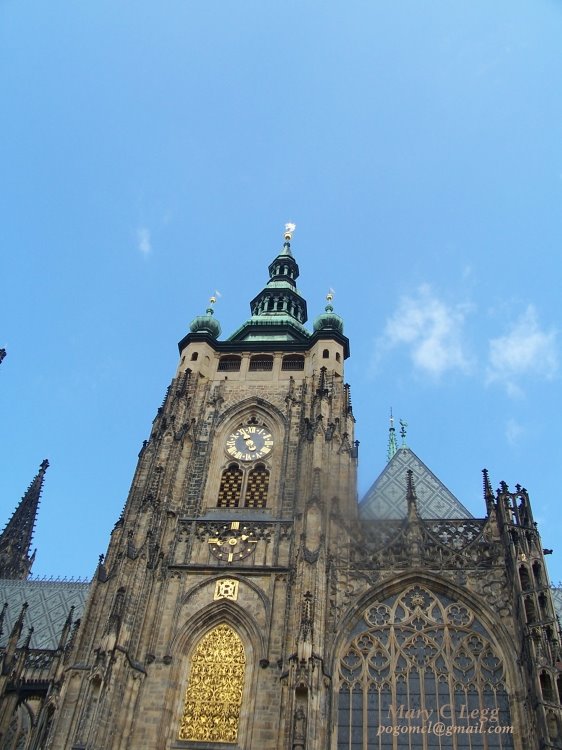
Dominating the Prague horizon, St Vitus crowns the Prague castle above Malostrana. The original plans of St Vitus were dran by Matthias of Arrau under the commission of Charles IV, the holy Roman Emperor. Charles inherited from his father's cultural and political interests, his love of all things French. The cathedral was originally envisioned as a basilica in casthedral form begun by Matthias of Arrau around 1348. Matthias envisioned a circlet of nine chapels around the rump of the cathedral which are heavily supported externally by graceful flying buttresses. However, Matthias died suddenly in 1352, leaving a partially completed eighth chapel. Charles IV, summoned Peter Parler to continue the work. Matthiaas of Arrau is entombed in the Chapel of St Anne's Chapel which was completed by Peter Parler.


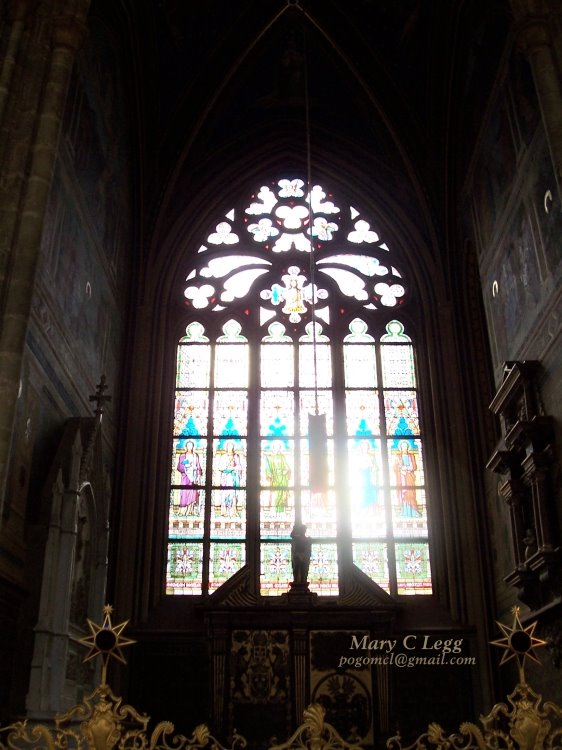
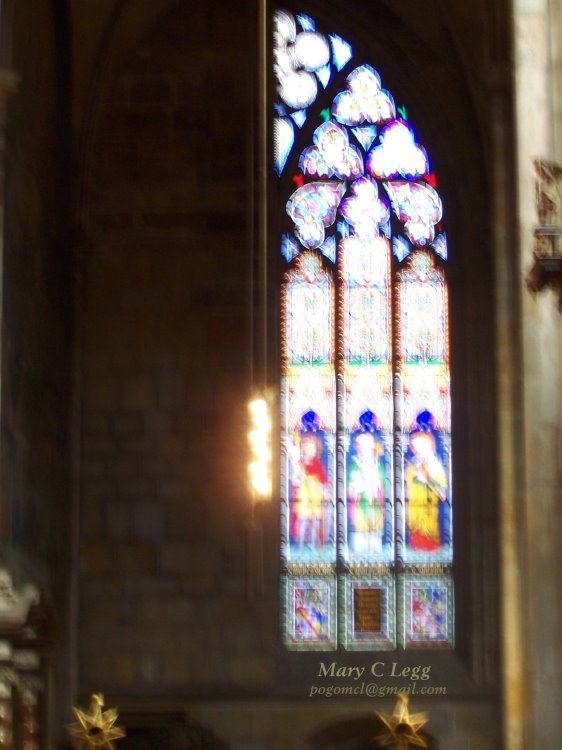
Peter Parler arrived in Prague in 1356 to overtake the supervision of the cathedral's construction according to the plans of Matthias. He also employed his father, Master Heinrich, in the construction of the prebstery and the Church of the Holy Cross. Parler completed the Chapel of the Holy Cross in 1356. His artistic skill is recognizeable in the delicate tracery of the enormous windows that surround the main altar. he completed the large windows of St Andrew's Chapel and the Chapel of St Wenceslas in 1366 where the relics were interred. The Chapel of the Holy Cross
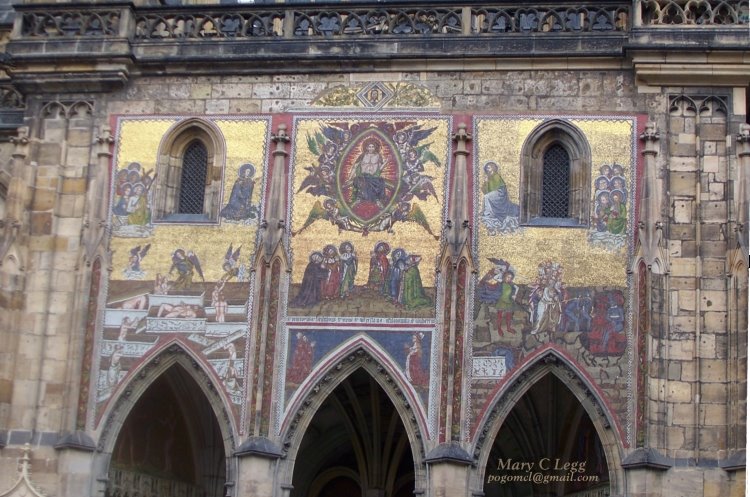
was meant to be a twin of the Chapel at the royal treasury at Karlstejn. The vaulting rises to 30meters which soars above the main altar. People aer dwarfed by the immense porportions of the cathedral. Parler understood the dangers of construction and the risks of roofs collapsing. He practiced the construction of the vaulting on the Old Town Bridge Tower. Despite the massive stonework involved, the cathedral structure is light and airy, delicate in its tracery and flowing columns that burst into flower as they reach toward the heavenly vaulting. The vault was completed in the 1370s and the royal treasury established established on the upper floor of gallery. In 1370-1371, the great portal to the south, known as the Golden Gate, was finsihed facing the palace. The gilded mosaic above the gate was created under Parler's workshop after Byzantium influence and depicts the Last Judgement.


In 1385, Parler completed the choir. He used his understanding of architectural design to hide the skeleton of the main buttresses by using the small supporting piers between the windows for the supports of the choir, creating a contrast of internal unity and simplicity with the complexity of the external flying buttresses and their ornamentation. With this completed, he began the preparation of the double nave; but for pragmatic reasons, he built a provisional wall on the west side of the Golden Gate so that the completed portion could be used for religious services. his provisional wall almost became permament, lasting for more than five centuries as wars waged and the lack of technical expertise and financial support left the cathedral abandoned with only the chancel completed.

The cathedral was not completed until after the First World War in 1925 and concecrated on 12 May 1929. As you look down through the double aisle, the neo-gothic blends harmoniously with the original plans of the great gothic master builders, Matthias of Arrau and Peter Parler.


Notre Dame of Reims
http://en.wikipedia.org/wiki/Notre-Dame_de_Reims

possibly the model for St Vitus
has chevet


chevet
http://en.wikipedia.org/wiki/Chevet
the asp that is designed using radiating chapels – distinguishing French Gothic architecture


cathedral architecture
http://en.wikipedia.org/wiki/Cathedral_architecture
origins and basic designs of cathedral architecture

St Vitus Cathedral
http://en.wikipedia.org/wiki/St._Vitus_Cathedral


St Vitus Cathedral
Aug 12, 2006 - 15 Photos

Wednesday, August 09, 2006

Karlstejn-Short Historical Background


King Charles had four wives.

The first wife, Blanche (1316-1348) was the daughter of Charles, Count of Valois and half-sister to Philp VI of France. They ahd two daughters, Margaret (1335-1349) who married Louis I of Hungary and katharine (1347-1395) who married Rudolf IV of Austria and later Otto V, Duke of Bavaria.

The second wife, Anne (1329-1353) was the daughter of Count Palatine, Rudolf II. They had one son, Wenceslas who died young.

The third wife, Anne of Swidnica (1339-1362) was the daughter of Henryk II of Schweidnitz and Katharine of Anjou. They had two children, Wenceslas (1361-1419) also called Wenceslas the Drunkard who succeeded Charles to the throne and Elisabeth (1358-1373) who married Albert of Austria.

The fourth wife was Elisabeth of Pomerania (1345-1393) who was the daughter of the Duke of Boleslaw V of Hind Pomerania and Elisabeth of Poland. They had six children: Anne of Bohemia (1366-1394) who ws married to Richard II of England, the son of Edward the Black Prince; Sigismund (1368-1437) who succeeded Wenceslas the Drunkard to the throne, but was the dominant of the two as the King of Hungary and the margave of Brandenburg. Apparently Sigismund did not have much filial affection for his half-brother and did not pull his nuts from the fire when Wenceslas unduly complicated his own life with greed and religious strife. The third was John, Duke of Golitz (1370-1396); Charles (1372-1372); Margaret (1373-1410) who married John III, the Burgrave of Nuremburg and Heinrich (1377-1378).


Future conflicts are definitely set as the daughters were wed to opposing armies of the Hundred Years War between the French and the English. Internal disputes for succession were already created and complicated by the religious wars that followed Charles IV death. With the papal court in Avignon, the English were alienated and sided with the return of the papacy to Rome. Hussites derived their antagonism against the corruption of the enriched papacy and its aristocratic and autocratic trappings from John Wycliffe. Perhaps Charles thought that by marrying his daughters on both sides of the conflict, no matter what, someone would come out a winner.


Charles died in 1378 coincidental to the return of papacy to Rome. However, the religious struggles had already started, and with Wenceslas the Drunkard on the Prague throne, they were extenuated. He alienated himself with the Archbishop of Prague by having the vicar-general, John of Nepomuk dropped off Charles Bridge for refusing to submit to his demands. At stake was the properties of the Benedictine Abbey at Kladrau which he wanted to ursurp in order to pocket its wealth through a persoanlly appointed friend. Instead John of Nepomuk complied with the orders of the Archbishop, warning the monks to appoint an abbot immediately after the old abbot, Rarek's death. Not wanting to cause a furor on the other side, he tried to protect Jan Hus from Catholic persecution.

Hus gained diplomatic protection from Sigismund to go to Constance before a council to reconcile the widening schism in the church. Instead, Jan Hus was arrested and burned at stake, becoming an instant national martyr. In 1420, Karlstejn was assaulted by Hussites and angry inhabitants of Prague and later overwhelmed by Swedes. Wenceslas, alienated his half-brother by his policies, was left to the mercy of his enemies until the situation favored Sigismund. After the Swedes left, Karlstejn was abandoned.


Rudolf II had the castle renovated in the 16th century, but it was without defence and quickly surrendered to Ferdinand II in 1648. Again the Swedes occupied it. The castle was abandoned until the 18th century when the Austrian Emperopr Francis II and his son restored the most heavily damaged sections. In 1853, Karlstejn came under historical protection of the Cental Monuments Protection Commission in Vienna. Friederich Schmidt and Josef Mocker were appointed to direct its restoration during 1887-1889 to its present form. Josef Mocker was also in charge of the restoration of St Vitus Cathedral, clearing it of the undesirable Hapsburg clutter and returning it to its Gothic nature.

Karlstejn


Karlstejn is approximately 30km south of Prague, perched on a sheer ridge that acts as a natural barricade for the river, Berounka. Karlstejn was constructed under the mandate of Charles IV with Matthias of Arras from Avignon as the architect of the royal treasury. Matthias of Arras was also the visionary to design the cathedral of St. Vitus which put Prague on the map as a cultural competitor to other European cities.


As the Holy Roman Emperor, Charles IV understood the importance of encouraging education and culture to flourish. The Castle in Prague elevated him not only above the city, but into the world's view with the new development of a cathedral worthy of an archbishophry. His father, John of Luxemburg, was a strong ally of Philip IV the Fair, and died on the battlefield of Crecy in 1346. Influenced by his father's love of the French, he styled the cathedral and Karlstejn after the best in French Gothic. The papal court was already established in Avignon. Charles' rule and death coincided with the return of the papacy to Rome in 1378. The foundation was laid in 1348 and the castle was completed in 1355 to serve principally as a fort. The castle stands atop one of five peak

s: Javorka (384m) Knezi (357m), Haknovec (380m), Haknova (402m) and Plesivec


(362m). The castle is surrounded by nearly impassible terrain should there be an attempt to overrun it or invade Prague from the south over land. The hillside aong the river was also cultivated by Charles IV with vineyards as he used Karlstejn as a domestic retreat.


The castle is constructed of three major parts. The large tower is called the Great, housing the Chapel of St. Cross which was finished with frescoes of the life of Charles IV by Mikulas Wurmser and 127 paintings by Master Theodoric representing the army of the heavens that include the Knights of the Theban League, members of the clergy and the saints. The walls are gilded and set with semi-precious stones with the ceiling encrusted with quartz to represent the stars in the heavens. A "sister chapel" is found in St. Vitus in Prague, designed with jasper inlay and semi-precious stones. The chapel is on the second floor so that access could be prevented as the knights kept watch below. The tower measures 25 x 17 meters and the walls average to be 4meters thick. In some areas, they are 6meters thick to make penetration impossible.

Inside the fort, the Church of Palmacive was constructed, but was alter destroyed in the Hussite Wars and reconstructed. The present bulding dates back only to the 16th century.


The Imperial Palace was designed to be the residence of the King and Queen. The ground floor was equipped with an armoury and housed the knights who protected the castle and its inhabitants from assault. The second floor housed the King, providing apartments for his entourage. The second floor contains the Hall of Ancestors with a parade of royal portraits. The upper floor was the Queen's residence with apartments for her attendents.


How to get there—

Trains leave from the Main Station and Smichov approximately every half hour. A roundtrip ticket with a monthly metro pass is 43crowns. Without the pass, the roundtrip ticket is about 70crowns. Do not buy a ticket on the train as tickets are nearly double the price for walk-ons. The aggravation of the conductor is not worth the inflation.

For cyclists, it is a pleasant stretch of road going south through small villages with just enough hills to make it enjoyable. Bike and hiking maps are available in the book sections of Carre Four, Tesco and HyperMarkt as well as local bookstores.


Okoli Prahy 12 by Kartografie Praha 65crowns covers the Beroun area with walking, biking paths with campsites and climbing sites. A good hike is Kakrlstejn-Srbsko-St John on the Rock.

For birders, take along your binoculars. The area is heavily populated by large raptors.

Tour tickets can be bought at the castle.
The Imperial Palace 200 Crowns for adults; 100 crowns for students and kids.
The Imperial Palace and the great Tower 300crowns for adults; 100 crowns for students and kids.
The castle is open Tuesday- Sunday. Mondays are closed. Schedule varies during the year in accordance to tourist flow, but 9-17 are regular spring and summer hours.

Information:
tel: 420 311 681 617 or 311 681 695
fax: 420 311 681 211
email: Karlstejn @stc.npu.cz

http://www.hradkarlstejn.cz

http://www.npu.cz/zprist


There are several pensions in the area where you can stay overnight and plenty of local pubs and eateries to stop for food and drink.


St John of Nepomuk


The statue of St John of Nepomuk was placed on Charles Bridge in 1683 in commemoration of his martydom under King Wenceslas IV on March 20, 1393. Popular legend of Prague and church lore has it that John of Nepomuk was thrown off the bridge for not disclosing the confessions of Queen Sofia of Bavaria-Wittelsbach by a jealous husband, Wenceslas the Drunkard. The story first appeared in the writings of the chronicler, Thomas Ebendorffer of Austria in the mid 15th century and then enlarged upon by a Jesuit, Balbinus of Prague, known as the Bohemian Pliny. Balbinus biography of John Nepomuk was refuted by the Jesuit order as being fabricated history, nontheless the story spread, resulting in official canonization of John Nepomuk under Benedict in 1683 in commemoration of his martydom under King Wenceslas IV on March 20, 1393. The first church dedicated to John Nepomuk was in Koniggratz in 1708 and 1719, the Pilgrimmage Church of St John Nepomuk was completed by the architect, Santini at Zdar nad Sazavou near Zelena Hora on the border between western Bohemia and Moravia. Today the church is listed as a Unesco's World Heritage site.

However, historical sources identify John of Nepomuk as Jan of Pomuk, the son of Wolflin who was educated in the newly established University of Prague for juriprudence and theology after which he studied Canon Law at the Univeristy of Padua. In 1374, he was appointed as first secretary to the Archbishop of Prague, John of Jenzenstein (jan of Jenstejn) and became a canon in the cathedral at Vysherhrad. In 1390, he became the Archdeacon of Sasz and also canon in the newly constructed cathedral of St Vitus at the Prague castle. The Archbishop John of Jenzenstein appointed him as his vicar-general because of his knowledge of civil and canon law.

Wenceslas, though, desired to accumulate power and wealth through establishing a new bishropy under his control through the Benedictine abbey at Kladrau which was flourishing and wealthy in lands and finances. The old abbott, Rarek, was about to die and Wenceslas wished to appoint someone whom he could control so that he would have the wealth and lands of the abbey at his disposal. The Archbishop instructed John of Nepomuk to warn the abbey to make immediate elections upon the abott's death, thereby thwarting the king's schemes. Incensed, the King arrested the vicar-general, the cathedral provost, Wenceslas of Meissen, the monk Odelenus and the archbishop's steward to have them interorrogated and tortured. John resisted torture and survived. He was gagged, put in a goatskin and dumped off the bridge into the river on March 20, 1393.

This account is documented from contemporaneous archives by the Archbishop and the newly-appointed abott of Kladrau. The body of ohn of Nepomuk was drwn from the river, Vltava (Moldau) and entombed in St. Vitus Cathedral. In later centuries, the stories becomes confused, arising with two Johns of Nepomuk, one serving as the Queen's confessor, however it is anachronistic confusion. The conflict between the two stories has been occassion for much dispute and controversy, particularly for attacks by detractors against the Catholic Church as John of Nepomuk is discounted as being a bad copy of Jan Hus. The error here should be immediately apparent as Jan Hus lived between 1369-1415 and John of Nepomuk was tortured and drowned in 1393. Wenceslas the Drunkard tried to potect Hus as he saw the danger of angry insurrection from his followers. Hus was excommunicated in 1411, Hus was burned at stake in Constance on July 6, 1415.

May 16 is the feast day of St John Nepomuk which is celebrated by a joint vesper sevice with the church of St. Thomas, OSA, and the Church of the Red Cross with a Star, the Church of St Francis directly on the river bank on the inner city of Prague. The Knights of the Order of the Red Cross with a Star were established by St Agnes Premyslide after Fransciscan idealism around 1233 in Prague. The Knights were officially recognized by the Vatican in 1237. St Agnes Premyslide was a daughter of Premysl Otakar I, living between 1211 and 1282. The baroque church, built between 1679-1688 by Jean B. Mathey, stands where the order had maintained its presence since it founding in 1252 as Hospilaters in Prague. After vespers, the two congregations make a solemn procession across the bridge and stop at the statue of St John Nepomuk to commemorate his martyrdom. Local legend states that if your prayer will be answered if you place your hands on the plate by the statue of St. John.

Links:

Wikipedia: John Nepomuk
http://en.wikipedia.org/wiki/John_Nepomuk

Answers.com John of Nepomuk
http://www.answers.com/topic/john-of-nepomuk

Catholic Encyclopedia
http://www.newadvent.org/cathen/08467a.htm

Wenceslas IV
http://tinyurl.com/p5rrz

Pilgrimmage Church of John of Nepomuk
http://www.worldheritagesite.org/sites/stjohnofnepomuk.html
Pilgrimage Church of St. John of Nepomuk at Zelena Hora" was added to Unesco's World Heritage List in 1994

Order of the Knightts with the Red Star
http://www.smom-za.org/bgt/redstar.htm

Tuesday, February 28, 2006

Janacek and Jenufa
Premiered: Prague, May 26, 1916
Libretto after Gabriela Preissová
German text by Max Brod

Janacek was living in Brno during the composition of Jenufa or Její pastorkyňa

which was first premiered there in 1904. Janacek sent the score to Karel Kovařovic and Gustav Schmoranz with hopes of premiering the work at the National Theater in Prague. The conductor-composer, Karel Kovařovic was in charge of the opera direction at the time. When Janacek wrote a cutting review of Kovařovic’s opera Ženichové / The Bridegrooms premiere in Brno, he created future conflicts for his own works to be performed in Prague. Kovařovic accepted Jenufa only after lengthy application from Janacek and the intervention of Gustav Schmoranz and Marie Calma-Veselá, the soprano who later sang the title role in the Prague premiere of May 26, 1916.


One story is that Director Schmoranz and the writer, Šípek-Peška were walking together when they heard a soprano singing. Curious about the unknown piece, they stopped and inquired by which Marie Calma-Veselá introduced the Jenufa’s famous prayer to the Virgin from the Second Act of Jenufa. Eventually Schmoranz was persuaded to take on Jenufa for the National Theater, but the performance was accepted on provision that Kovařovic had control over the orchestration.


When Janacek learned of its acceptance, he went in search of a soprano to sing the Kostelnicka and recruited Gabriela Horvátová who was in Brno for performance. Already an opera of domestic chaos, the conflicts grew within Janacek’s domestic and professional life. When he met Horvátová at her hotel and was received by her in bed. This characterized their relationship as it moved from Brno to Prague in preparation of the premiere while he became further estranged from his wife.


The libretto was written after a play by Mrs Gabriela Preissová, Her Stepdaughter. Zdenka and Leos Janacek had two children, Vladimir and Olga, but both died in childhood. Zdenka was just short of sweet sixteen when she married Janacek in 1881. She bore Olga in 1882 and had Vladimir in 1888. Vladimir died of scarlet fever when he was two in 1890 and Olga died in 1903. The bitter loss is reflected in the musical composition. Janacek moved from set structure of opera which introduced arias with recitative to what he called, Sprachmusik, shaping the musical line around speech patterns and having the orchestra mimic speech. This is particularly effective in the characterization of the Kostelnicka in contrast to Jenufa who retains her idealism in the face of her stepmother’s bitterness. Jenufa also brought Czech nationalism onto stage as it concentrated on domestic life rather than mimicking Italian or German opera with the import of another French novel set as a libretto.


The Viennese premiere came on February 18, 1918 at the Hofoper with Maria Jeritza. Janacek’s affair with Horvátová ended, but another began and continued with Kamila Stösslová. Jeritza also sang the title role, Jenufa for the Metropolitan premiere in New York in 1924. The German text was translated by Max Brod. Controversy surrounds the opera regarding which production to follow, Brno 1904 or Prague 1916.


Jenufa / Její pastorkyňa
http://www.leosjanacek.co.uk/jenufa.htm

Leoš Janaček
http://www.leosjanacek.co.uk/
biographical site

Link Page
http://www.leosjanacek.co.uk/links.htm

Classical Music Pages- Leoš Janaček
http://w3.rz-berlin.mpg.de/cmp/janacek.htm

Classical Net- Janacek
http://www.classical.net/music/comp.lst/janacek.html

John Tyrell, biographer
http://www.czechmusic.co.uk/
for books on Janacek

Janacek Association in Japan
http://www2.snowman.ne.jp/~hyamane/indexenglish.htm

Leos Janacek Gesellschaft
http://www.leos-janacek.org/

http://www.leos-janacek.org/nav/3fentry.htm

Janacek Archive and Museum in Brno
http://www.sun.rhbnc.ac.uk/Music/Janacek/

Leos Janacek as a Teacher
http://w3.rz-berlin.mpg.de/cmp/janacek_teacher.html

Open Directory Janacek
http://dmoz.org/Arts/Music/Composition/Composers/J/Jan%c3%a1cek,_Leos/

Narodni Divadlo - The National Theater

After the Bouda Theater was demolished in 1789, there was no available theater for the national movement. In 1844, František Palacký, František Ladíslav Rieger and Alois Pravoslav Trojan joined together to establish a ne nationalist theater for Prague. Originally a plot was designated at the base of Vaclavské nam - Wenceslas Square, but in 1852 a plot of land was bought on the Vltava Embankment where the National Theater satnds today on Narodni where the most Legii or Legion Bridge crosses over to Vitězná. Josef Zítek won a competition for the design in which Ignac Ullman and Niklas also contributed proposals. The theater is constructed in late Italian Renaissance style and was completed in 1881. Ullmann built a provisional theater adjoining the rear end of the plot designated for the main theater which had the capacity of 900 seats. Shortly thereafter, a fire broke out which destroyed the auditorium, stage and roof. From that time, until 1911, the theater was under continual reconstruction and internal artistic development as national artists contributed their works in murals, sculpture and decorative works. In 1954, the theater was in bad state and needed renovation for electrical and technical support. At the same time, the new building for the National Theater was planned and constructed in the adjoining plot which today attracts local skateboarders.

The theater is seen from the island under the bridge.